Rehearsal Room Equipment: What's Included and What to Bring
What equipment does a rehearsal room provide? A practical guide to standard studio gear, what to bring yourself, and a room-by-room comparison of Thunder Studio's three rooms.
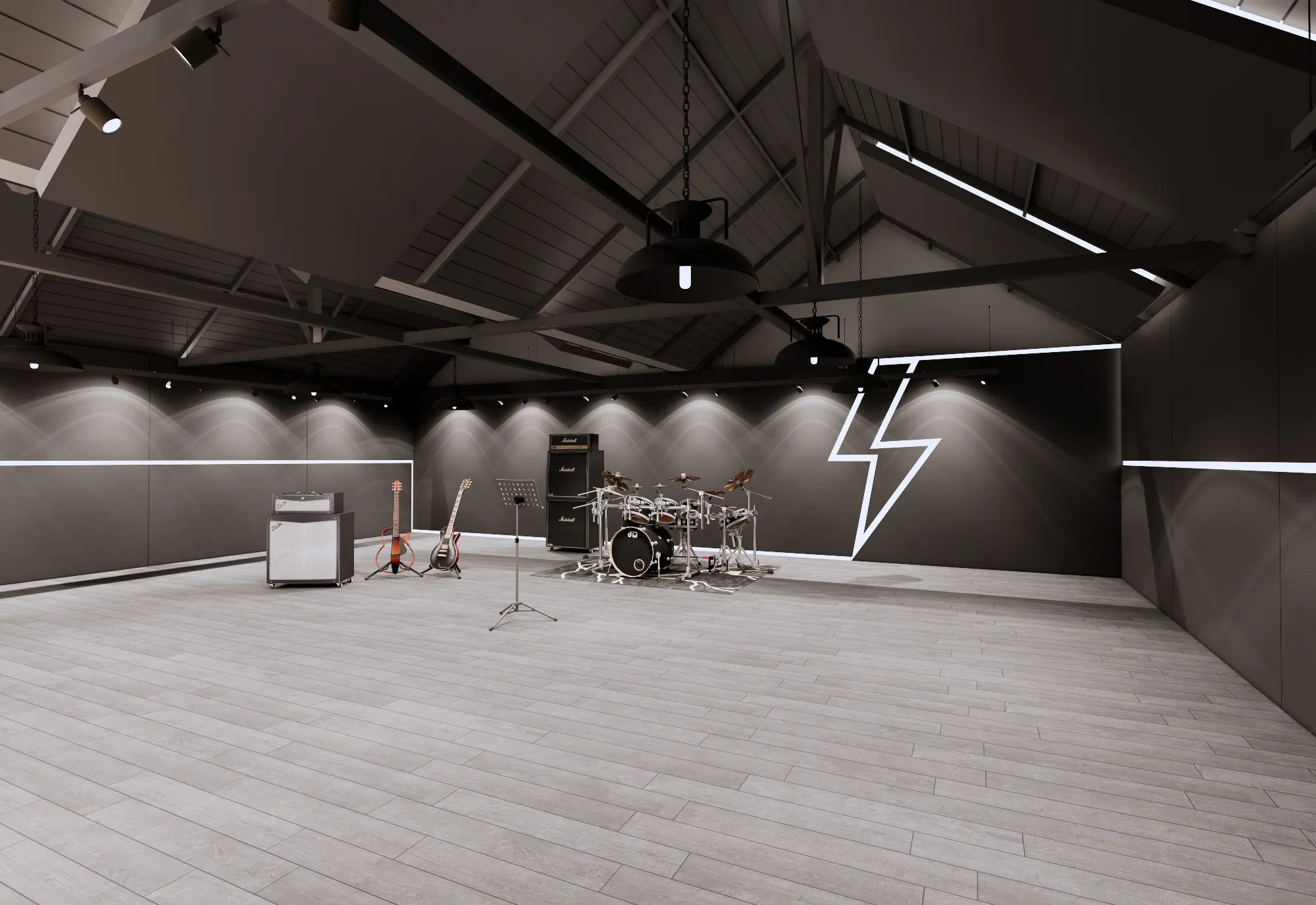
Most rehearsal rooms include amplifiers, a full drum kit, a PA system, and microphones as part of the room hire. Musicians need to bring their own instrument, cables, tuner, and earplugs. This guide covers the standard gear found in rehearsal studios, what you need to supply yourself, and a room-by-room breakdown of what Thunder Studio provides across its three spaces.
Standard equipment in a rehearsal room
A well-equipped rehearsal studio typically provides:
Guitar and bass amplifiers
Amps are the core of any rehearsal room. A large room like Studio 1 usually has two separate amps — one for guitar, one for bass. Marshall amps are the industry standard: they deliver warm, responsive tone, handle high volumes cleanly, and survive years of heavy use. Smaller rooms may have a single combo amp suitable for guitar or keyboards.
Full drum kit
Because drums can't realistically be transported, every serious rehearsal room provides a complete kit. A standard setup includes a bass drum with pedal, snare drum, hi-hat with stand and pedal, crash and ride cymbals, and at least two toms. Drummers can adjust hi-hat height, snare tension, and cymbal angles to match their playing style.
PA system
The PA consists of a mixer and a pair of speaker cabinets. It handles microphone signals and any line-level sources like keyboards or backing tracks. Better-equipped rooms add monitor speakers so vocalists can hear themselves clearly without relying on the main PA.
Microphones with stands
Rehearsal rooms typically stock dynamic microphones (Shure SM58 or equivalent) — rugged, feedback-resistant, and well-suited to loud environments. They come pre-connected with XLR cables running to the PA mixer.
What you should bring yourself
Studios provide the backbone, but these items are always your responsibility:
- Guitar or bass — studios don't lend instruments. Your instrument comes with you.
- Instrument cables — bring at least two. One to use, one spare. A dead cable ends rehearsal immediately.
- Tuner — a phone app works, but a clip-on tuner is far more reliable in a loud room.
- Drumsticks — drummers must bring their own, plus a spare pair in case one snaps.
- Picks — bring several. They vanish.
- Earplugs — rehearsal rooms run at 95-110 dB. Musicians' earplugs (flat-response plugs) reduce volume without killing the tone.
For a complete pre-session checklist, see How to prepare for band rehearsal.
Equipment comparison: Thunder Studio rooms
Thunder Studio has three rooms. Here's exactly what's in each one:
| Equipment | Studio 1 (Large) | Studio 2 (Small) | Control Room |
|---|---|---|---|
| Guitar amp | Marshall ✓ | Guitar amp ✓ | — |
| Bass amp | Marshall ✓ | — | — |
| Full drum kit | ✓ (bass drum, snare, hi-hat, cymbals, toms) | — | — |
| PA system | ✓ | ✓ | — |
| Microphones + stands | ✓ | ✓ | — |
| Mixing console | — | — | ✓ |
| DAW workstation | — | — | ✓ |
| Studio monitors | — | — | ✓ |
| Rack gear | — | — | ✓ |
| Capacity | 6-10 musicians | 2-4 musicians | 1-3 people |
See full details for each space: Studio 1 (Large Room), Studio 2 (Small Room), Control Room.
How to use the equipment in a rehearsal room
Setting up a guitar or bass amp
Start with gain low, volume at midpoint, and all EQ knobs at noon (flat). From that neutral starting point, add what you need — more bass for a fuller guitar sound, slightly more gain for drive. Never crank the gain before you've heard the room's acoustics. Sudden high-gain signals can cause feedback and damage speakers.
Adjusting the drum kit
Every drummer is a different height and has different preferences. Adjust hi-hat stand height, snare position, and cymbal angles before the session starts. Play lightly through the kit first to check that nothing is loose, and get a feel for the kick pedal — spring tension varies between kits and affects your playing significantly.
Setting up the PA and microphones
Plug the XLR cable from the mic into the mixer channel, then open the channel. Start with the gain low, turn on the speakers, and raise the fader gradually until you reach the right level. If you hear feedback (a high-pitched squeal), lower the gain or move the microphone further from the speakers.
Taking care of studio equipment
Rehearsal room gear is shared by many musicians. These are the rules that keep everything working:
- Don't crank amps past safe levels — amps pushed too hard distort badly and blow speakers. Use the volume you need to hear the band clearly, not maximum.
- Don't rearrange the drum kit without asking — if you need to move a cymbal stand or reposition the kit, check with staff first. Return everything to its original position before you leave.
- Report broken gear immediately — if you find a loose cable, a broken connector, or a cracked drumhead, tell the staff. Don't attempt repairs yourself.
- Unplug cables before switching off amps — disconnect instrument cables from the amp before powering down, and coil cables neatly when done.
- Turn everything off when you're done — power down amps, PA system, and any monitors before leaving the room.
Frequently asked questions about rehearsal room equipment
What equipment does a rehearsal room typically include?
Most rehearsal rooms provide guitar and bass amplifiers, a full drum kit, a PA system, and microphones with stands. The specific gear varies by studio size and tier.
What should I bring to a rehearsal room?
Always bring your own instrument (guitar, bass, or keyboard — studios don't lend these), instrument cables, a tuner, drumsticks (if you're the drummer), picks, and earplugs for hearing protection.
What is the difference between Studio 1 and Studio 2 at Thunder Studio?
Studio 1 is the large room for 6-10 musicians, with two Marshall amps (guitar and bass), a full drum kit, PA system, and microphones. Studio 2 is the small room for 2-4 people — it has a guitar amp, PA system, and microphones, ideal for solo practice or small groups.
How do I set up a Marshall amp in a rehearsal room?
Start with gain low, volume at midpoint, and EQ flat (bass, mid, treble all at 5). Then adjust from that neutral baseline. Never crank gain to maximum without first checking the room's acoustics — it can cause unwanted feedback and damage speakers.
Do I need earplugs for rehearsal?
Yes, especially for drummers and anyone standing close to the kit. Rehearsal room volume typically runs 95-110 dB, which can cause cumulative hearing damage. Musicians' earplugs (flat-response plugs) reduce volume without distorting the sound significantly.
What is the Control Room at Thunder Studio used for?
The Control Room has a mixing console, DAW workstation, studio monitors, and rack gear. It's designed for recording, mixing, and post-production — different from a rehearsal room which focuses on live band practice.
Want a broader overview of how rehearsal rooms work? Read What is a music rehearsal room?
Ready to book a room?
Thunder Studio has rooms for every band size, with pro-grade gear at Don Mueang, Bangkok. Open daily 10:00 AM to 10:00 PM. Contact us for rates and availability.